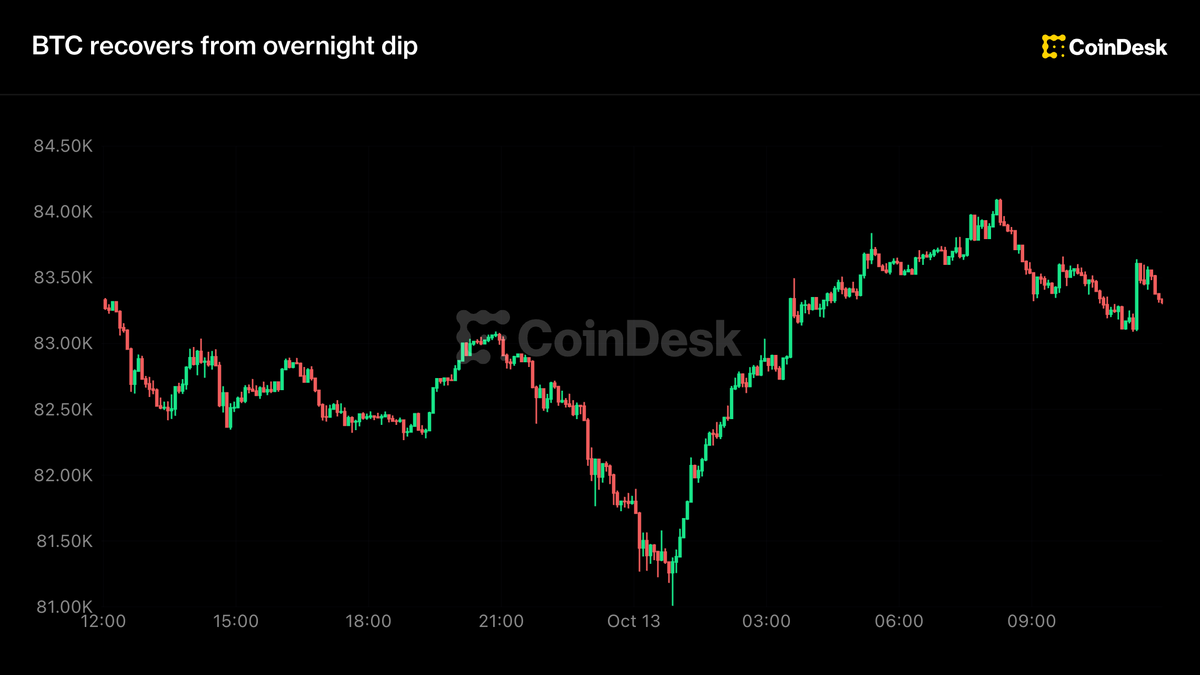
Bitcoin rebounded sharply after falling to about $81,000 in early Asian trading, briefly climbed above $84,000 and later traded near $83,500. The move created a roughly $3,000 range over 24 hours as traders positioned ahead of U.S. Inflation data and weighed changing expectations for Federal Reserve policy.
The recovery was uneven across digital assets. Zcash fell nearly 8% to about $1,210, HYPE declined nearly 6% to about $82, Solana and Dogecoin each dropped 4%, and XRP lost about 3% to $1. Ether and BNB slipped between 1% and 2%. The Crypto Fear & Greed Index fell to 57, remaining in greed territory but reaching its lowest level since Sept.
New York Fed President John Williams said another rate increase this year may be appropriate but indicated he saw no need for further increases in 2027. The immediate policy question was whether the inflation release would reinforce the case for another hike or allow markets to focus on Williams’ less aggressive 2027 outlook.
The September consumer-price data later showed that inflation accelerated.
Technology stocks added another source of pressure. JPMorgan shares fell more than 2% in early trading after the bank’s earnings opened the U.S. Reporting season, while Europe’s Stoxx 600 rose 0.4% as oil prices and bond yields declined.
Other company developments showed how closely crypto markets were tied to corporate financing and digital-asset accumulation. Strive, led by Matt Cole, added 3,311 bitcoin during the prior week, taking its holdings to 32,773 coins.
Bitcoin analyst Alex Kuptsikevich said bitcoin could move toward $85,000 and retest $87,000 if the decline proved to be a healthy correction, but said broader risk appetite would need confirmation from other markets. The price rebound therefore left bitcoin near the top of its short-term range while altcoins remained weaker and the inflation data kept the next Federal Reserve decision at the center of the market’s attention.