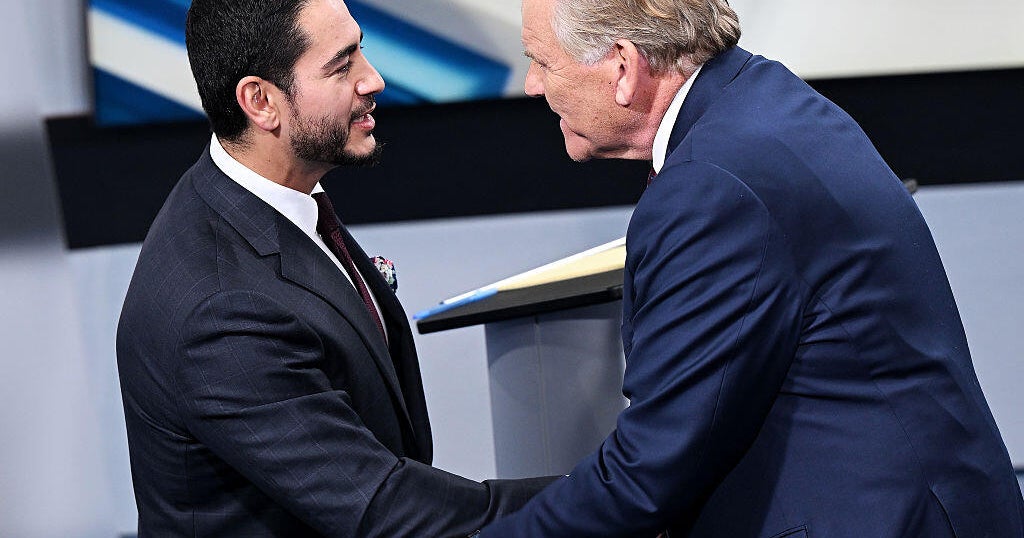
Republican Mike Rogers and Democrat Abdul El-Sayed used their final Michigan Senate debate to sharpen opposing arguments over President Donald Trump, national security, health care and the cost of living. El-Sayed portrayed Rogers as a likely ally of Trump, while Rogers argued that El-Sayed was obscuring progressive positions and could not be trusted on security issues.
El-Sayed called Rogers’ agenda a “MAGA vision” and said the former congressman would be a “sock puppet” for Trump in the Senate. He tied Trump’s policies and the Iran war to higher prices for fuel and groceries, and invited the audience to play “MAGA bingo.” Rogers said he planned to attend Trump’s Michigan rally that Sunday, though he did not yet know the final details.
Rogers accused El-Sayed of a “pattern of deception” and said some Democrats considered him too extreme. He targeted El-Sayed’s support for Medicare for All, arguing that financing the single-payer plan would require large tax increases. El-Sayed countered that corporations were taking money from voters and said a national health-care system could cost less than the current system while retaining bipartisan support.
The sharpest exchange concerned allegations linking El-Sayed to the Muslim Brotherhood and supporters of Hamas. El-Sayed denied ever belonging to the organization and said references to his mother’s alleged views were unrelated to him, noting that he was not raised by his birthmother after his parents divorced. Rogers called the issue a national-security risk and later questioned whether El-Sayed could obtain a security clearance if elected; El-Sayed called the line of attack shameful.
The dispute followed a series of public exchanges over the same issue. At an Oct. 17 town hall, El-Sayed answered “Sure, yeah, absolutely” when asked whether he would disavow the Muslim Brotherhood, then said his allegiance was to the U.S. He later said he had clearly condemned the organization. Rogers nevertheless argued that the response did not amount to a disavowal, a claim later rated false by an independent fact-check.
Iran policy produced another divide. El-Sayed said Iran had posed a threat but argued it had been contained by the Obama-era nuclear agreement, which Trump abandoned during his first term. Rogers called Iran an absolute threat and warned that gas prices could climb further if Iran controlled the Strait of Hormuz or acquired a nuclear weapon. He also criticized El-Sayed’s earlier answers on the issue as disqualifying for a Senate candidate.
On tariffs, El-Sayed criticized Trump’s trade measures but left room for targeted import duties. Rogers described the tariffs as mixed, questioned the trade conflict with Canada and said domestic manufacturing was being brought back. The debate was less chaotic than the candidates’ first meeting earlier in the month, when they talked over one another and continued arguing during a commercial break.
Gary Peters is retiring, and both parties view Michigan as important to control of the chamber. Their final debate left voters with sharply different choices on party alignment, foreign policy, health care and the role of identity in the campaign.