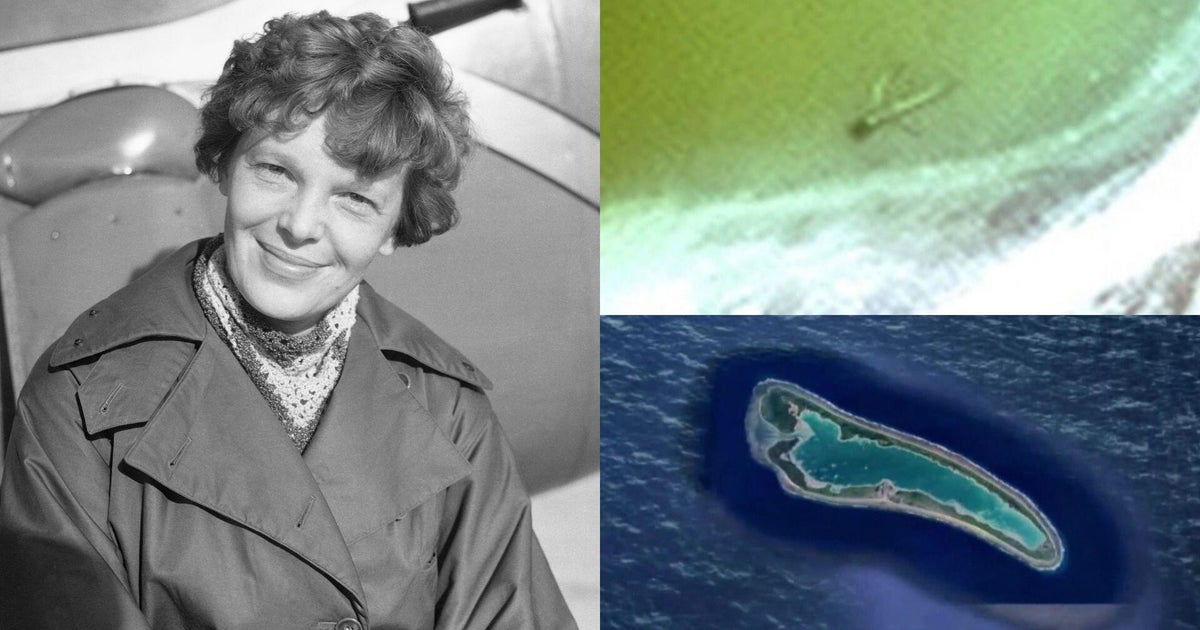
A seven-day expedition to Nikumaroro in Kiribati has ruled out a submerged object that researchers hoped might be Amelia Earhart’s missing Lockheed Electra 10-E. The team concluded that the Taraia Object was a collection of coral and other debris, not aircraft wreckage, after examining it in the atoll’s lagoon.
They had been trying to reach Howland Island, but could not locate it and reported that their fuel was running low. The Nikumaroro theory holds that they followed a navigational line southeast, landed on the reef of what was then called Gardner Island and survived for at least some time as castaways.
The theory draws on several disputed clues. Former residents of a British colony on the island recalled aircraft wreckage, while investigators later found 1930s-era cosmetic containers, a woman’s shoe, a compact fragment, a jackknife and evidence of campfires. Bones discovered there in 1940 were sent to Fiji and later lost, but a modern analysis of the original measurements concluded they were consistent with a woman of European ancestry. In 2017, forensic dogs indicated that human remains may previously have been present at the site, although excavation did not recover them.
The Taraia Object was first noticed in satellite imagery from 2015 by an amateur researcher who thought its shape resembled an aircraft. Critics argued that it looked more like a fallen tree, palm or root ball.
Investigators used side-scan sonar and a magnetometer to search beneath the lagoon’s sediment. Rough seas delayed their work, but they extended the operation and returned ashore on Oct. The remote sensing detected no metal, and closer examination found that the apparent metallic reflection came from a shiny, hardened mixture of coral sand. The expedition leader said the findings tested and rejected the object as Earhart’s aircraft.
The result removes one prominent lead but does not resolve what happened to Earhart and Noonan. Earlier searches have also failed to locate the plane, including a 2019 expedition led by undersea explorer Robert Ballard and a 2024 claim that a deep-sea image showed the Electra, later identified as a rock formation. Another group is raising funds for a future ocean search based on the possibility that the aircraft ran out of fuel and crashed at sea.