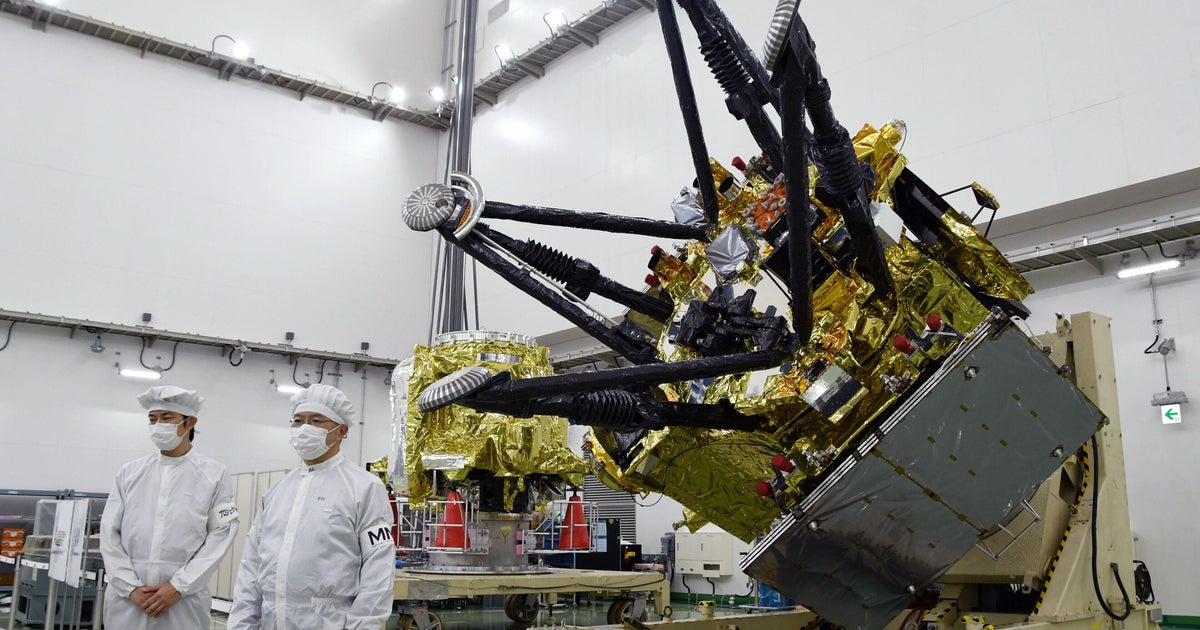
Japan launched the Martian Moons eXploration spacecraft aboard an H3 rocket from Tanegashima Space Center, beginning a roughly five-year mission to investigate Phobos and Deimos and bring material from Phobos back to Earth. The launch occurred at 3: 41 p. The sample-return capsule is scheduled to reach Australia in 2031.
MMX is designed to clarify whether Mars’ moons formed from debris thrown into orbit by an ancient collision involving Mars or are asteroids captured by the planet’s gravity. NASA is contributing the MEGANE gamma-ray and neutron spectrometer, which will measure the moon’s elemental composition, along with other hardware and scientific support.
The spacecraft will release IDEFIX, a microwave-sized, four-wheeled rover developed by France and Germany. Because Phobos has extremely weak gravity, the rover is expected to bounce across the surface before stopping, righting itself if necessary and examining terrain, minerals and temperatures with cameras, a Raman spectrometer and a radiometer.
It will use Japanese and U.S. -supplied systems to collect at least 10 grams of soil and rock, then conduct additional observations of Deimos before leaving the Mars system in 2030. The sample capsule will separate during the return journey and land in Australia.
Laboratory testing of the returned material will allow scientists to compare its chemical and isotopic signatures with Martian rocks and asteroid samples. If completed, MMX will be the first mission to return samples from the Martian sphere and will give researchers direct material from a moon that may preserve evidence about the formation of Mars and the early solar system.