Saudi Arabia is facing a sharper security challenge after a series of Houthi missile and drone attacks on airports, including King Khalid International Airport in Riyadh. Saudi authorities said a strike on Oct. 10 killed 12 people and injured 309, while another projectile the following evening killed one person and wounded 11. The Riyadh airport remained closed as officials investigated how the attacks penetrated the kingdom’s air defenses.
The strikes followed a Saudi-led military campaign against Iran-backed Houthi forces in Yemen, where the rebels seized positions near the Bab el-Mandeb Strait. That waterway handles about 12% of global trade, and the Houthis have threatened Saudi-linked shipping as fighting intensifies. The group has also claimed attacks on Saudi energy and military facilities, although some battlefield claims could not be independently verified.
The attacks have increased concern over Saudi Arabia’s ability to protect export infrastructure while shipping through the Strait of Hormuz is already constrained by the wider Iran conflict. The International Energy Agency said nearly 15 million barrels of crude a day crossed Hormuz in 2025, alongside almost 5 million barrels a day of petroleum products. It estimated that only 3. 5 million to 5. 5 million barrels a day could potentially be redirected through Saudi and United Arab Emirates pipelines.
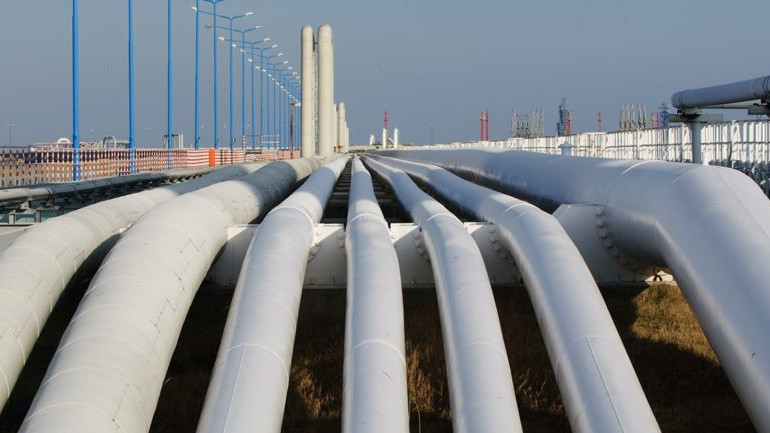
Saudi Energy Minister Prince Abdulaziz bin Salman said the kingdom would continue supplying domestic and international customers. He pointed to the East-West pipeline, which links eastern oilfields to the Red Sea port of Yanbu and provides a route around Hormuz.
Brent crude traded around $103 to $105 a barrel as attacks on Riyadh and strikes on tankers near Hormuz and Oman heightened market concerns. Saudi Arabia continued hosting the World Petroleum Energy Congress and related ministerial meetings despite the airport closure, but the security crisis led several major oil executives to drop off the event schedule.
The immediate risk is not a confirmed loss of Saudi oil supply but the possibility that attacks on airports, pipelines, tankers or alternative export routes could narrow the industry’s room to reroute flows. Saudi infrastructure provides one of the main available outlets if Hormuz remains disrupted, yet the IEA cautioned that rerouting large volumes has not been robustly tested at full scale.