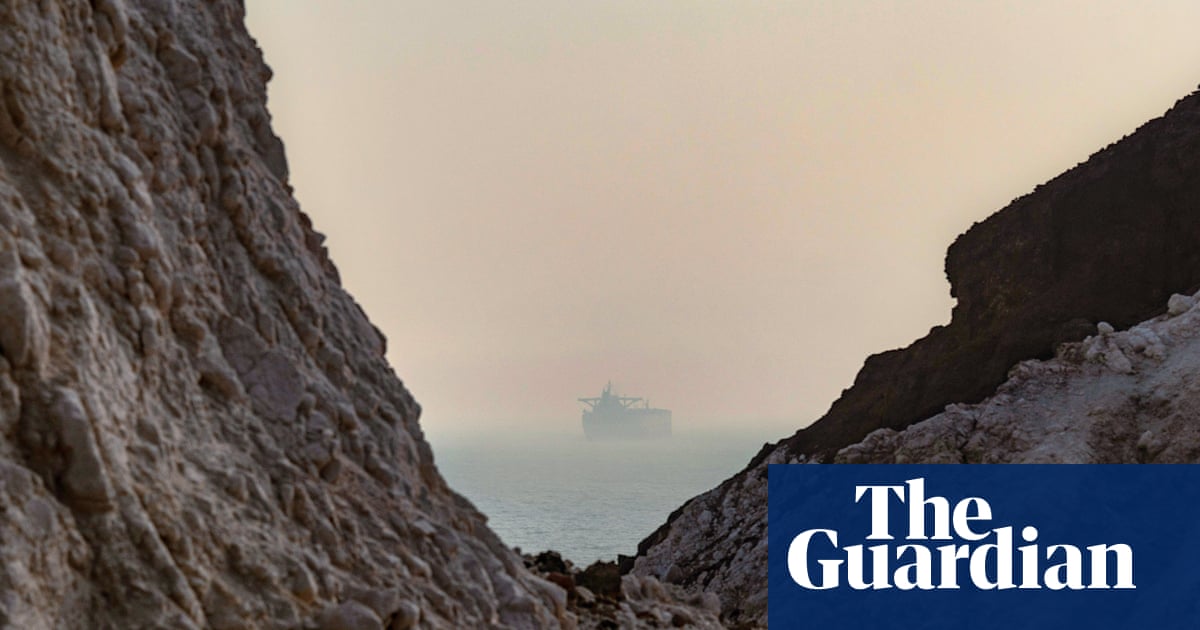
The Strait of Hormuz, a vital maritime route between Iran and Oman, has become a battleground for life during the ongoing conflict with the US and Israel. Capt Farouq, a 39-year-old captain, navigates the strait as he heads to Hormuz Island, a short half-hour journey from the Iranian mainland’s Haqqani Port. Despite the war, crossings have not stopped, though passenger numbers have declined and the journey has become more dangerous. Explosions from the strait have been reported for months, with unclear origins. Farouq, who has been a captain for 18 years, describes the strait as his second home, but the war has made his job increasingly perilous. His ferry was damaged by shrapnel while docked at the port, though it was quickly repaired. The conflict has also affected local livelihoods, with fishers and harbor workers facing restrictions and attacks. Anvar Sadat, a 38-year-old fisher, says business has slowed, and several colleagues have been killed in attacks. Life on Hormuz Island has changed little, though the war has brought some new restrictions and a handful of attacks, mostly on infrastructure. The government has closed off parts of the island’s north, but beyond that, life continues. Tourism, which was a key part of the island’s economy, has taken the biggest hit, with guesthouses and homestays closed. Khaleh Kaniz, a 67-year-old painter, says she has not considered leaving, as her home and life are here. The strait remains a lifeline for many Iranians in the southern province of Hormozgan.
The conflict has also had economic implications, with attacks on the southern port of Bandar Abbas damaging 760 fishing and commercial vessels. In the first week of October alone, at least 12 attacks were reported against oil, liquefied natural gas and liquefied petroleum gas tankers, sending oil prices back above $100 a barrel. With pressure mounting on US President Donald Trump before the midterm elections, he is rumoured to be once again considering strikes.
Hormuz Island has long been known as a kind of 'hippy paradise', a place Iranians have come to regard as 'free'. Artists and creatives moved here from bigger cities in search of peace; women swim in bathing suits, writers and painters find space to work, and life moves slower. The island’s residents have tried to preserve the sense of freedom that has set it apart, despite the war. Residents have climbed up the barren mountains of red and white stone, watching the war unfold in the distance. Tankers remain stranded in the strait, explosions can be heard regularly. Yet residents also say the war has not driven them from the island.