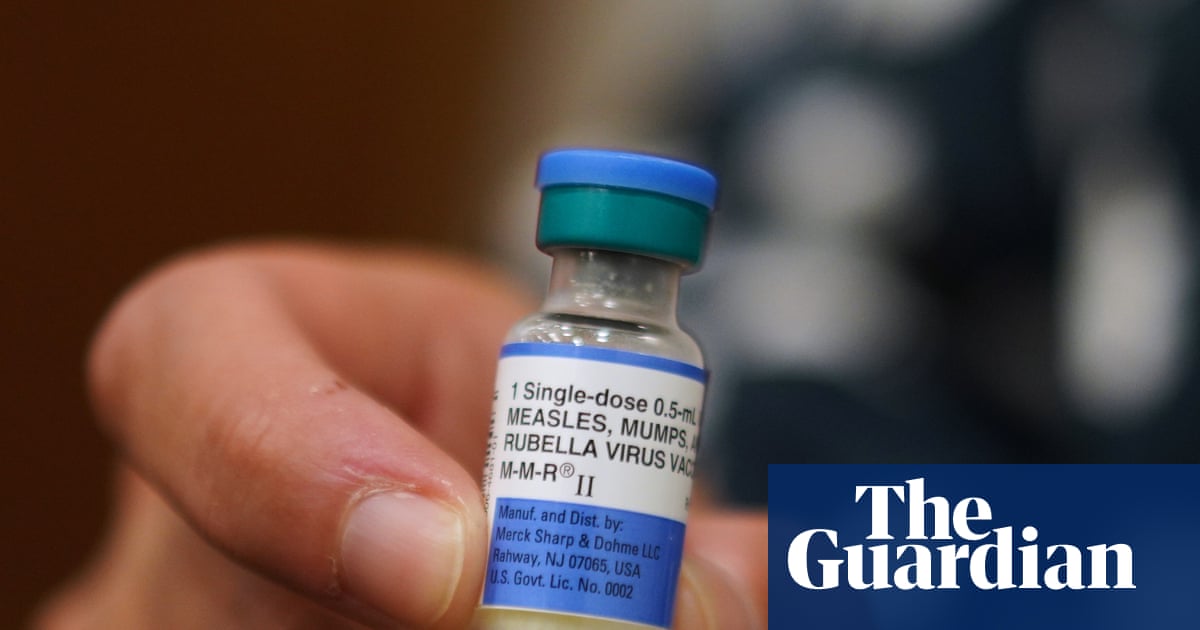
Polymarket and Kalshi are offering contracts tied to U.S. Public-health outcomes, turning measles case counts, vaccine policy, drug trials and regulatory decisions into tradable financial positions. The markets allow users to buy contracts that pay a fixed amount if a defined outcome occurs, with prices changing as participants trade. The expansion brings health statistics and medical decisions into a fast-growing event-contract industry whose legal status remains contested.
The contracts cover questions including how many measles cases the United States will record in 2026, whether the country will lose its measles-elimination status, when the Food and Drug Administration might approve a skin-cancer vaccine and whether the Centers for Disease Control and Prevention will change vaccine recommendations. A Polymarket advertisement placed beside an elementary school in Brooklyn asked whether any state would end vaccine markets, but the sign was vandalized within a week, with the portion carrying the market’s logo and prediction language torn away.
The companies frame the products as event contracts or derivatives rather than conventional bets. Kalshi operates a Commodity Futures Trading Commission-registered exchange, while Polymarket’s original exchange is offshore and says it blocks U.S. Users; Polymarket also operates a U.S. Exchange registered with the CFTC. Congressional policy materials describe the contracts as binary instruments whose prices are established by continuous buying and selling, while noting that the rapid expansion has raised questions about regulatory arbitrage, insider trading and whether some products resemble gambling more closely than financial derivatives.
Regulatory filings show how health contracts are designed to settle. In a July 2025 filing, Kalshi described disease contracts that resolve when an official source confirms a human case before a specified date. The rules prioritize agencies including the World Health Organization and CDC, exclude suspected or unofficial cases, and set a $1 settlement value.
The timing has added urgency to the measles markets. The Pan American Health Organization was considering whether to remove the United States’ measles-elimination designation, although CDC Director Erica Schwartz said that losing the designation would not change the agency’s outbreak response.
Health-policy specialists have questioned whether public-health outcomes should be monetized in markets accessible to retail traders. Matthew Eisenberg of Johns Hopkins said the platforms can list contracts on anything with a verifiable outcome, while Rutgers gambling researcher Lia Nower argued that prediction markets operate with fewer consumer protections than state-regulated gambling, including limited requirements for deposit controls, self-exclusion, advertising restrictions and treatment funding. Nower cited research showing that more than half of people ages 13 to 27 had gambled in the previous year; among young gamblers, 39.5% showed some gambling-related risk and 10.3% were classified as high risk.
Critics also point to the possibility that contracts tied to trials, FDA decisions or public-health policy could reward people who possess confidential information or influence an outcome. Kalshi has described its clinical-trial markets as a pilot intended to bring specialized knowledge into public view, while Polymarket has not publicly addressed the broader medical concerns raised about its listings.