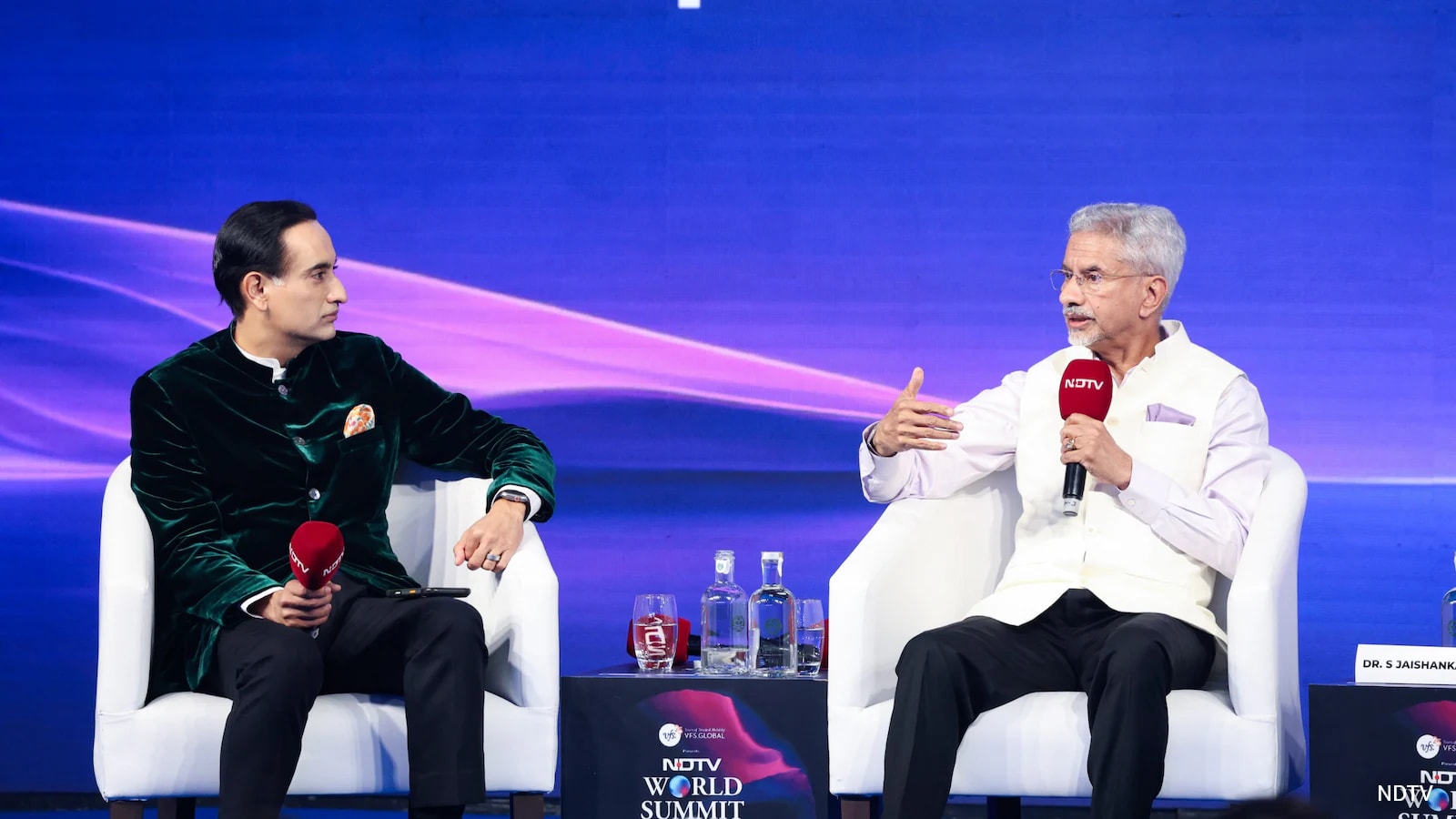
Jaishankar said India and China can work toward a functional relationship without expecting their disagreements to disappear. Speaking in New Delhi at the NDTV World Summit 2026, he said large neighbouring powers would continue to face disputes but must recognise and manage them. He described a basic working relationship as being in both countries’ national interests, while warning that restoring normal ties would take time.
Jaishankar said peace and tranquillity along the border remain the necessary foundation for broader improvement. He linked the border situation to trade, political contacts and exchanges between civil societies, saying the disruption after the 2020 Galwan clashes had affected the relationship beyond the frontier. He said the hostility that followed the violence was understandable but did not serve either side’s interests.
On the boundary dispute, Jaishankar said India’s position had not changed: any eventual settlement must cover the entire boundary. He added that concrete discussions could begin with particular areas, because a comprehensive process would still need a starting point. His remarks left open the possibility of step-by-step engagement without presenting talks on individual sectors as a substitute for a final settlement.
Jaishankar also pointed to the arrangements built over several decades to prevent confrontations. India and China had established agreements and procedures covering patrol conduct, spacing, signalling and the handling of encounters. Those safeguards were tested in 2020, when a violent face-off in the Galwan Valley caused casualties and triggered a wider military and diplomatic crisis.
The subsequent official discussions called for disengagement, de-escalation, adherence to existing boundary agreements and continued communication through diplomatic and military channels. A 2020 joint statement also said both sides should maintain distance, ease tensions and continue work on confidence-building measures. Later efforts to stabilise relations included a patrol agreement and the withdrawal of additional forces from some border areas, but the broader boundary question remains unresolved. Jaishankar’s formulation therefore placed the immediate emphasis on maintaining peace and rebuilding the ability to deal with one another, while acknowledging that normalisation would not remove the underlying differences.