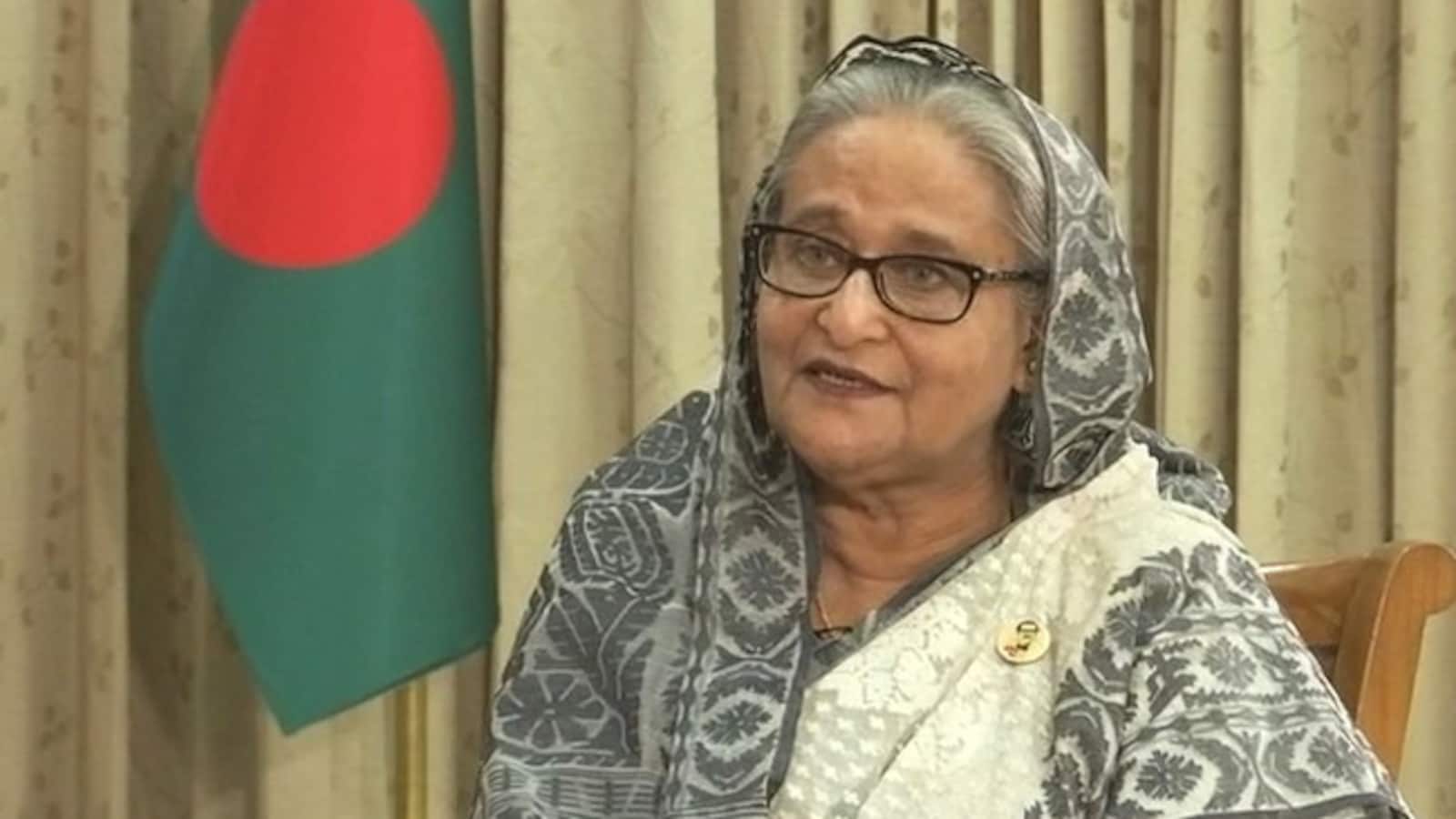
Former Bangladesh prime minister Sheikh Hasina has accused authorities of allowing religious minorities to face growing insecurity and impunity, while connecting the alleged violence to what she described as a wider campaign against her Awami League party.
In a message marking Sharadiya Durgotsav, Hasina said Hindus and other religious and ethnic minorities were living in fear. She cited alleged killings, attacks on temples and homes, vandalism of idols, property seizures, extortion, violence against women and intimidation. She said conditions had worsened since August 5, 2024, when a student-led uprising forced her from office and she fled to India.
Hasina urged Awami League leaders, activists and supporters, along with citizens committed to the secular ideals of Bangladesh’s Liberation War, to stand with Hindu communities and protect communal harmony. She repeated the message that religious belief is individual while festivals belong to everyone, and called for equal protection, dignity and freedom of worship.
She also alleged that Awami League offices had been vandalised, looted and burned, while party members’ homes, businesses, farmland, livestock and other property were targeted. She accused the interim administration led by Muhammad Yunus of permitting perpetrators to avoid accountability while pursuing politically motivated cases against Awami League members. Those allegations were not independently established in the material reviewed.
Hasina referred to the killings of Rangpur teacher Ganapati Chakraborty and Bhaluka garment worker Dipu Chandra Das, questioning the handling of both cases. She also highlighted the detention of Hindu leader Chinmoy Krishna Das Prabhu, who faces sedition charges after leading rallies demanding greater security for Hindus. Bangladesh’s government has said the case is based on specific charges rather than religious identity, while India has urged Dhaka to protect minorities and their right to peaceful assembly.
The dispute follows competing accounts of violence after Hasina’s removal. The interim government disputed the earlier total and said most incidents were political rather than communal.
Hasina contrasted the current situation with Awami League commitments in its 2024 election manifesto. The document promised a National Commission for Minorities, a special minority-protection law and continued measures to safeguard the lives and livelihoods of religious minorities, small ethnic groups and other disadvantaged communities. Her message did not establish that those proposed measures had been enacted before her government fell.
She concluded by urging Hindus not to feel isolated and invoking the country’s 1971 independence struggle and the secular vision associated with Sheikh Mujibur Rahman. Her appeal was for a Bangladesh where citizens of every faith could celebrate religious festivals without fear and receive equal protection from the state.