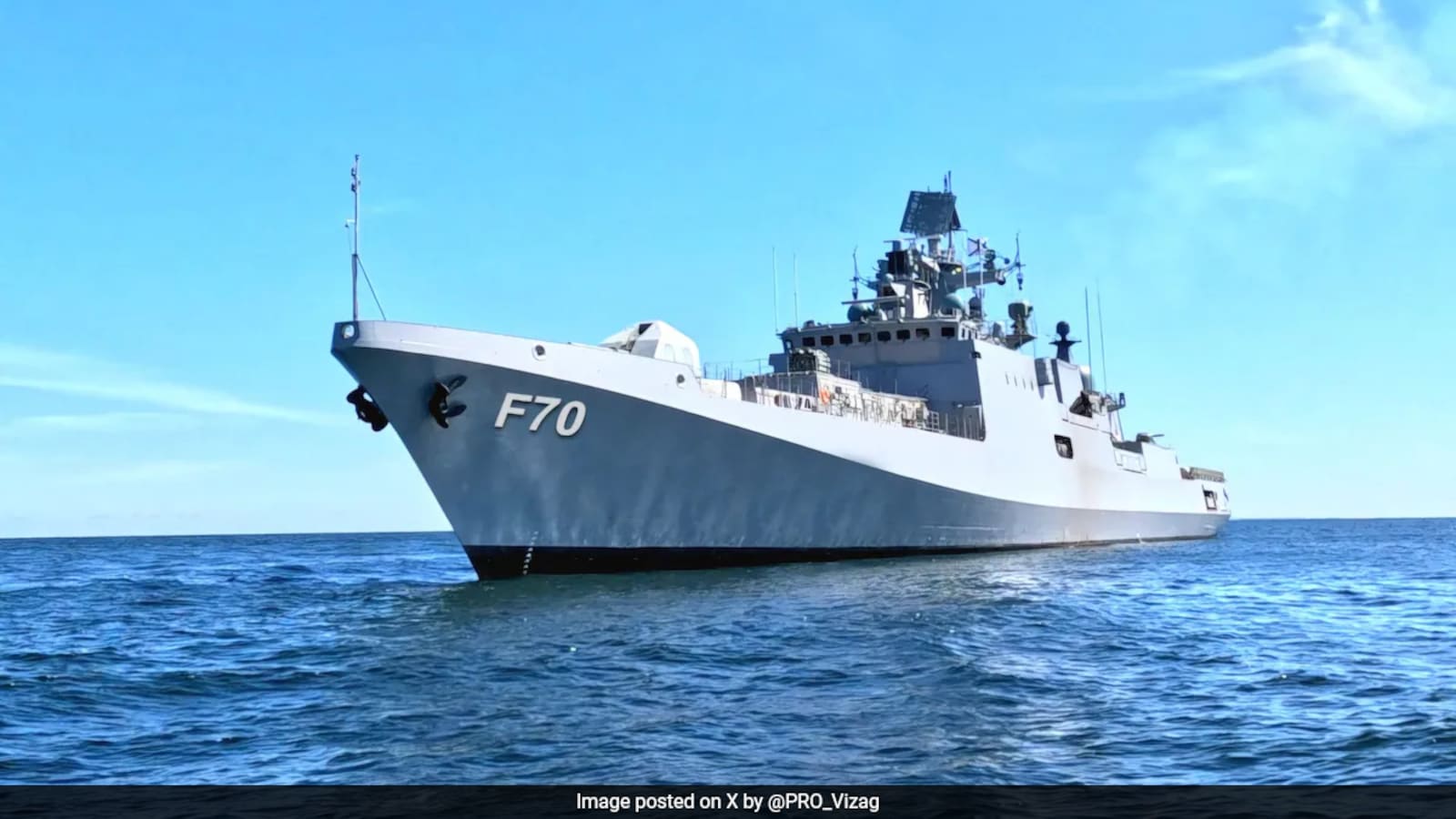
India’s drive to build indigenous warships is moving beyond hulls, weapons and sensors toward the propulsion systems that determine how those vessels move and generate power. Major Indian warships still rely on foreign-origin gas-turbine propulsion, while higher-capacity marine diesel engines have also largely been imported or assembled domestically.
The propulsion gap has strategic consequences because restrictions on exports, intellectual property or foreign supply could affect the readiness of otherwise indigenous warships. The proposed solution is a national naval propulsion mission linking research, manufacturing, testing and long-term support instead of treating each engine or component as a separate procurement.
Gas turbines remain the most difficult technology challenge. India has experience with licensed assembly, inspection and testing of the GE LM2500 family, while the Defence Research and Development Organisation’s Gas Turbine Research Establishment has pursued the Kaveri Marine Gas Turbine as a maritime derivative of the Kaveri aircraft-engine programme. An earlier version used the Kaveri core with additional compressor and turbine stages, reached 12 megawatts during testing and was evaluated at a naval facility in Visakhapatnam.
Recent projects show movement in both gas-turbine generation and diesel propulsion. In April 2025, the Navy and Kirloskar Oil Engines signed a ₹270 crore project to develop a 6-megawatt medium-speed marine diesel engine, with more than 50% indigenous content in the prototype and government funding covering 70% of the project. The programme also includes detailed design work for engines in the 3-to-10-megawatt range for propulsion and power generation on Navy and Coast Guard ships.
The generators are intended to provide power for naval combat systems, weapons and sensors, while the contract includes indigenous production and life-cycle support.
The proposed propulsion agenda extends beyond engines. Naval diesel development would require expertise in computational fluid dynamics, hydrodynamic modelling, cavitation testing, precision manufacturing and underwater acoustics, with the aim of creating an Indian design chain from engine to propeller. Integrated electric propulsion is also identified as a future opportunity as radars, electronic-warfare systems, directed-energy weapons, unmanned systems and combat-management equipment increase demand for electrical power.
That approach would require high-power permanent-magnet motors, converters, inverters, semiconductor devices and energy-storage systems. The proposal calls for India to begin building that industrial base during a 2026-31 roadmap, while developing larger capabilities in advanced materials, combustion, high-temperature metallurgy, air-independent propulsion, power electronics and propulsion controls.
Testing is presented as a central requirement rather than a final stage. Dedicated land-based facilities would be needed to evaluate engines, gearboxes, shafting, motors and complete propulsion trains under realistic conditions. The proposed division of work assigns difficult, commercially uncertain technologies to DRDO, while private companies handle design, engineering, manufacturing, integration and life-cycle support, with public-sector enterprises contributing in areas such as heavy engineering, metallurgy, power systems and precision manufacturing.