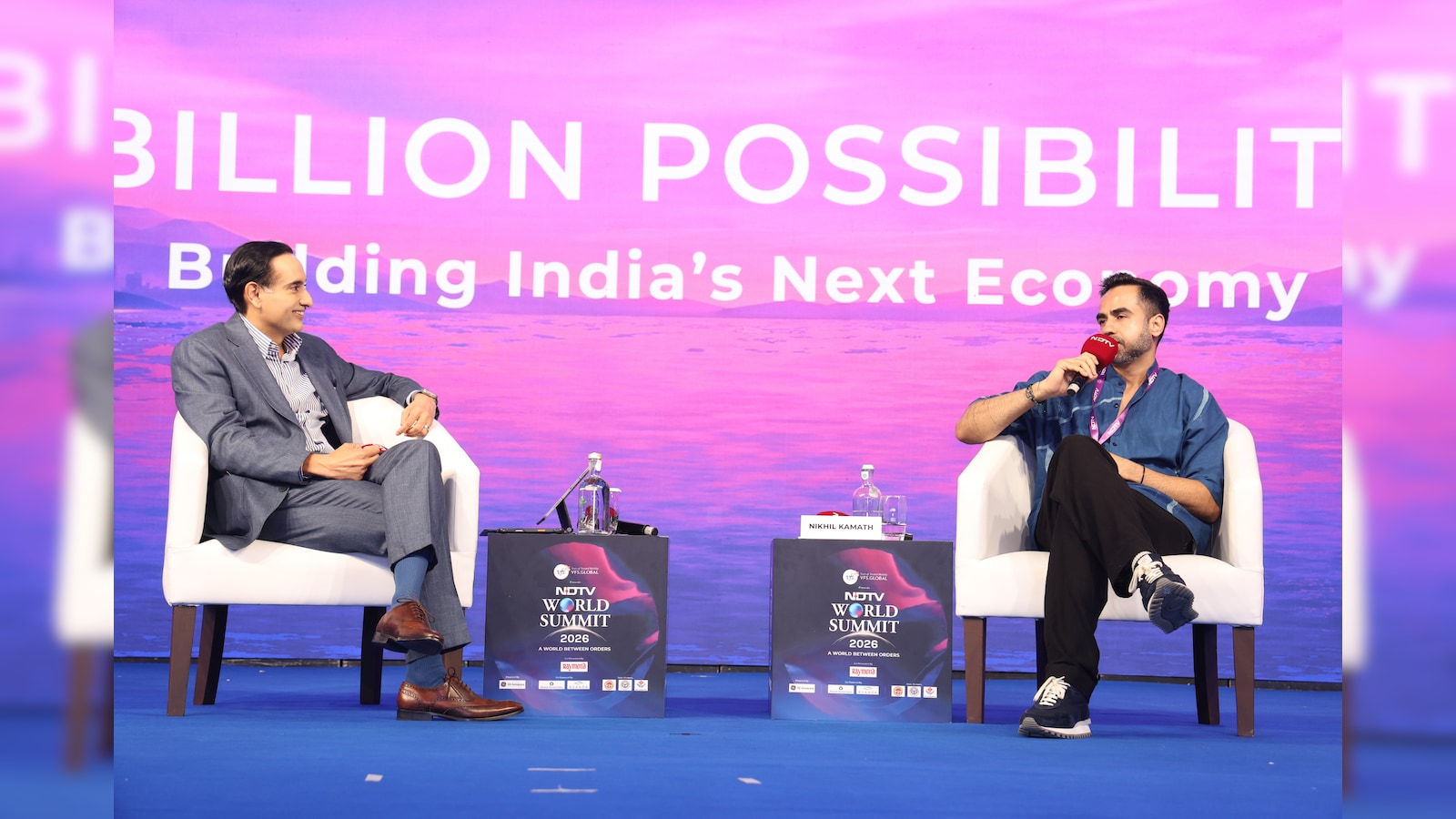
Nikhil Kamath has argued that India’s strongest path into artificial intelligence may lie in applications, inference services and supporting infrastructure rather than in competing directly with the United States and China to build frontier models.
He estimated that establishing a megawatt of power capacity and running related data-centre operations could cost 30% to 40% less than in Western markets, while lower labour costs could support services built around AI deployment. He also warned that the financing environment may become more difficult: roughly $1 trillion a year is flowing into AI, he said, compared with enterprise revenue of about $100 billion to $200 billion. The gap, in his view, could make fundraising harder as borrowing costs rise.
His broader economic argument was that Indian states should compete more aggressively for investment, with chief ministers operating more like company executives and states retaining more of the gains created by successful economic policies. He pointed to China’s competition among provinces as a model. Kamath also said India should move beyond a narrow focus on software exports, develop consumer brands for international markets and prepare for a more fragmented digital world in which countries may build their own versions of major online platforms.
Kamath linked that ambition to his Foundry initiative, which backs consumer brands aimed at overseas customers. He cited Indian companies expanding into Dubai and New York as evidence that domestic businesses can build premium identities without simply copying Western labels. He also said India’s startup culture should make it easier for entrepreneurs who fail to begin again, arguing that social and policy barriers can discourage ambitious attempts.
The discussion also covered markets. Kamath defended speculators as necessary for price discovery, but opposed advantages such as exchange co-location that allow some traders to execute faster than retail investors. He called for algorithmic and retail orders to receive a more level playing field and said taxes should focus more on income than on the cost of transactions, including securities transaction tax, charges and other execution costs. He argued that reducing those frictions could help broaden equity participation and provide more risk capital for new businesses.